Entry — Deckhand · dock attendant · terminal laborer
Physical fitness, drug screening and a basic safety orientation are the typical starting requirements for waterfront entry roles.
 AWWHIFHERITAGE & INNOVATION FOUNDATIONParticipate ↗
Cross-Divisional Portal
Working-waterfront careers across all six divisions — operations, infrastructure, heritage, trades, capital and media. Search and application are always free for job seekers.
SOURCE-LINKED RESEARCH
Loading current source listings…
Structured source listings update automatically. Retrieval is distinct from editorial review. Authored analysis requires editorial approval.
Search approved research and official sources ↗Career → Training → Credential → Employer → Active Jobs
Third-party listings link to the employer's official application source. AWWHIF positions are clearly labeled. Paid placements are visibly labeled and never imply AWWHIF endorsement.
Every industry area follows the same institutional pathway — entry, training, credential, employer, advancement — mapped across the divisions it serves.
Deck, engine and terminal roles that keep vessels moving, berths working and cargo flowing — the operational core of the working waterfront.
Physical fitness, drug screening and a basic safety orientation are the typical starting requirements for waterfront entry roles.
Tug, ferry and terminal employers train largely on the job; maritime academies and union programs run structured deck and engine courses.
Able Seaman ratings and officer licenses require documented sea time and U.S. Coast Guard examinations; TWIC is required for most secured facilities.
Employers span ports and harbor services, passenger and cargo operators, marinas and marine contractors — browse them in the Organizations directory.
Progression generally follows license upgrades, tonnage and route experience, and demonstrated supervisory ability.
Welding, fabrication, electrical, machining and rigging — the skilled industrial crafts that build, repair and modernize vessels and waterfront structures.
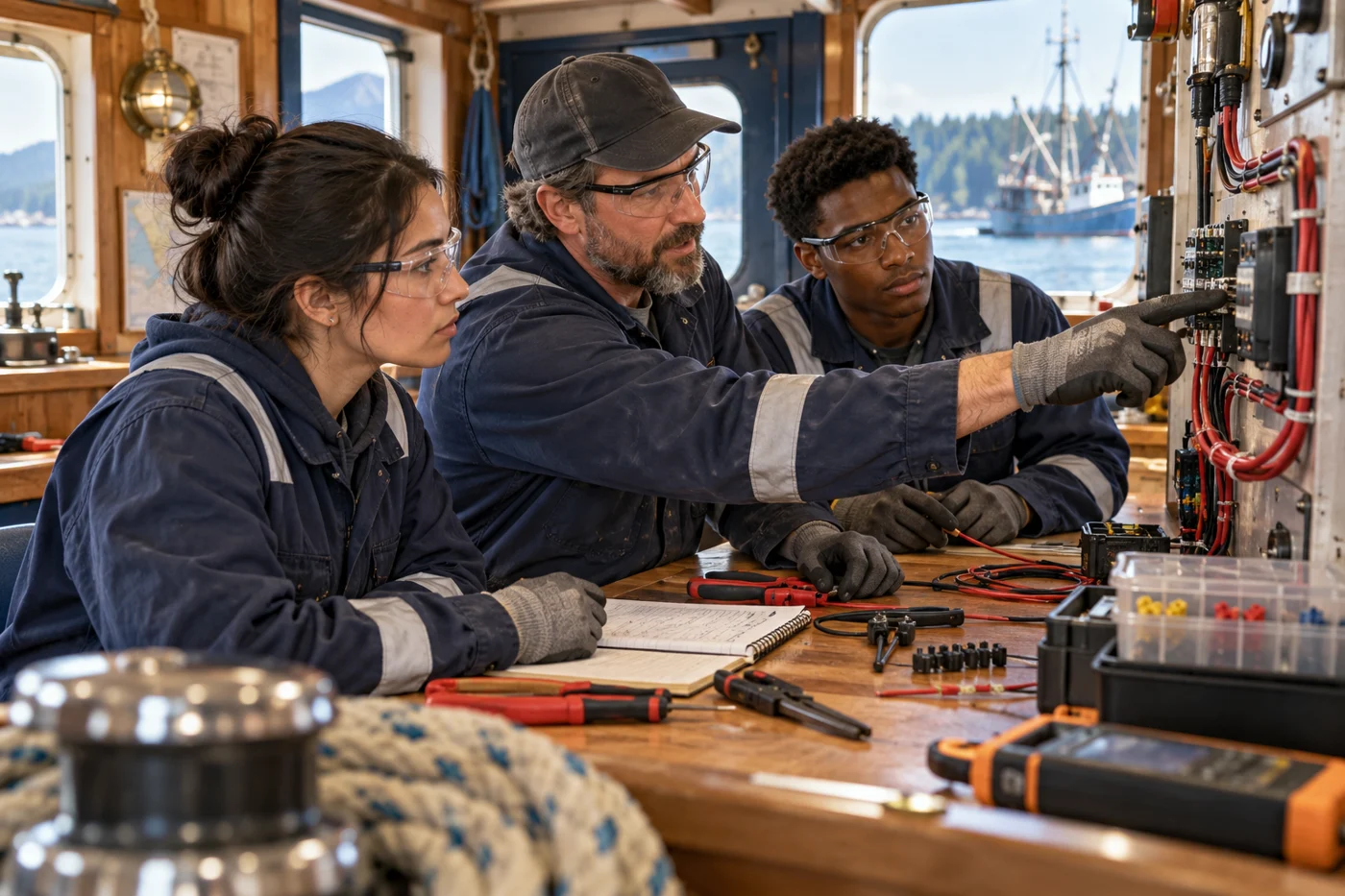
Many trades enter through helpers' roles; OSHA-10/30 safety training is commonly expected before first assignment.
Union joint apprenticeship committees (JATCs) and technical schools run multi-year welding, electrical, machining and shipfitting programs combining classes with paid work.
Structural (D1.1) and marine (D3.6) welding certifications, state journeyman cards and trade licenses are the recognized currency of the trades.
New-build and repair yards, boatbuilders and industrial fabricators hire across every trade — see active listings below.
Experienced tradespeople advance into supervision, quality assurance and estimator roles; many port-side managers began in the trades.
Dredging, marine construction, remediation and resilience work — rebuilding piers, cleaning up sites and hardening the shoreline.
Heavy-equipment and marine-construction firms regularly hire entry labor with CDL development paths; field safety awareness is the first gate.
Operator training, 40-hour HAZWOPER for contaminated-site work and confined-space qualifications anchor this pathway's training.
NCCER craft certifications, NCCCO crane credentials and commercial licenses are the standard portable qualifications.
Dredging companies, pile-driving and wharf-repair contractors, and environmental remediation firms anchor this sector.
Field experience converts into project-controls and estimating careers, often supported by engineering-technology coursework.
Grant management, procurement and capital program roles — the business side of funding and delivering waterfront projects.
Writing ability, spreadsheet fluency and comfort with public-agency process open most first roles in this pathway.
Public administration or finance study, plus federal grants-management and procurement training offered by professional associations.
Grants Professional Certified (GPCI), Project Management Professional (PMP) and federal financial-management certificates are common milestones.
Port authorities, municipal harbor departments, infrastructure consultancies and waterfront nonprofits all staff this pathway.
Advancement follows a track record of compliant, on-time awards — exactly the discipline AWWHIF's Funding Matrix institutionalizes.
Museum, archive and interpretation careers — keeping the history of the working waterfront alive as part of its working future.
Volunteer-to-paid pipelines are common; historic ships and maritime museums recruit heavily from engaged volunteer corps.
Undergraduate history or museum-study programs, plus specialized conservation and collections-care training.
National Association for Interpretation certification, state teaching credentials and conservation specializations are the field's markers.
Maritime museums, historic vessels, park units and school-based maritime programs employ across this pathway.
Careers branch into curation, education leadership, archival direction and hands-on restoration-trades specialization.
Photography, film, writing and archival work — documenting the waterfront and turning its evidence into education and public memory.
Assistships on documentary shoots, newsroom internships and portfolio-building freelance work are the standard entries.
Film school or media-production programs, plus oral-history and archival-methods training offered by universities and associations.
A working portfolio is the primary credential; drone (Part 107) certification and archival certificates add specialized reach.
Documentary producers, maritime museums, trade press and in-house communications teams at ports and agencies.
Careers lead to producing, institutional archives and communications leadership — the Media Matrix's professional backbone.
Training and credential requirements are set by employers, unions, credentialing bodies and regulators. This atlas is general national guidance — always confirm standards with the specific program, employer or licensing authority.
No active positions match these filters
New working-waterfront jobs are added as sources are verified. Clear filters to see everything.
Post a Job ↗