DIV-01
Documents Division 1 operations.
Explore ↗ AWWHIFHERITAGE & INNOVATION FOUNDATIONParticipate ↗
DIVISION 06
Record. Teach. Share. — preserve institutional memory and turn project evidence into education, communications and durable knowledge.
What are we learning, what must be preserved, and how do we communicate it?
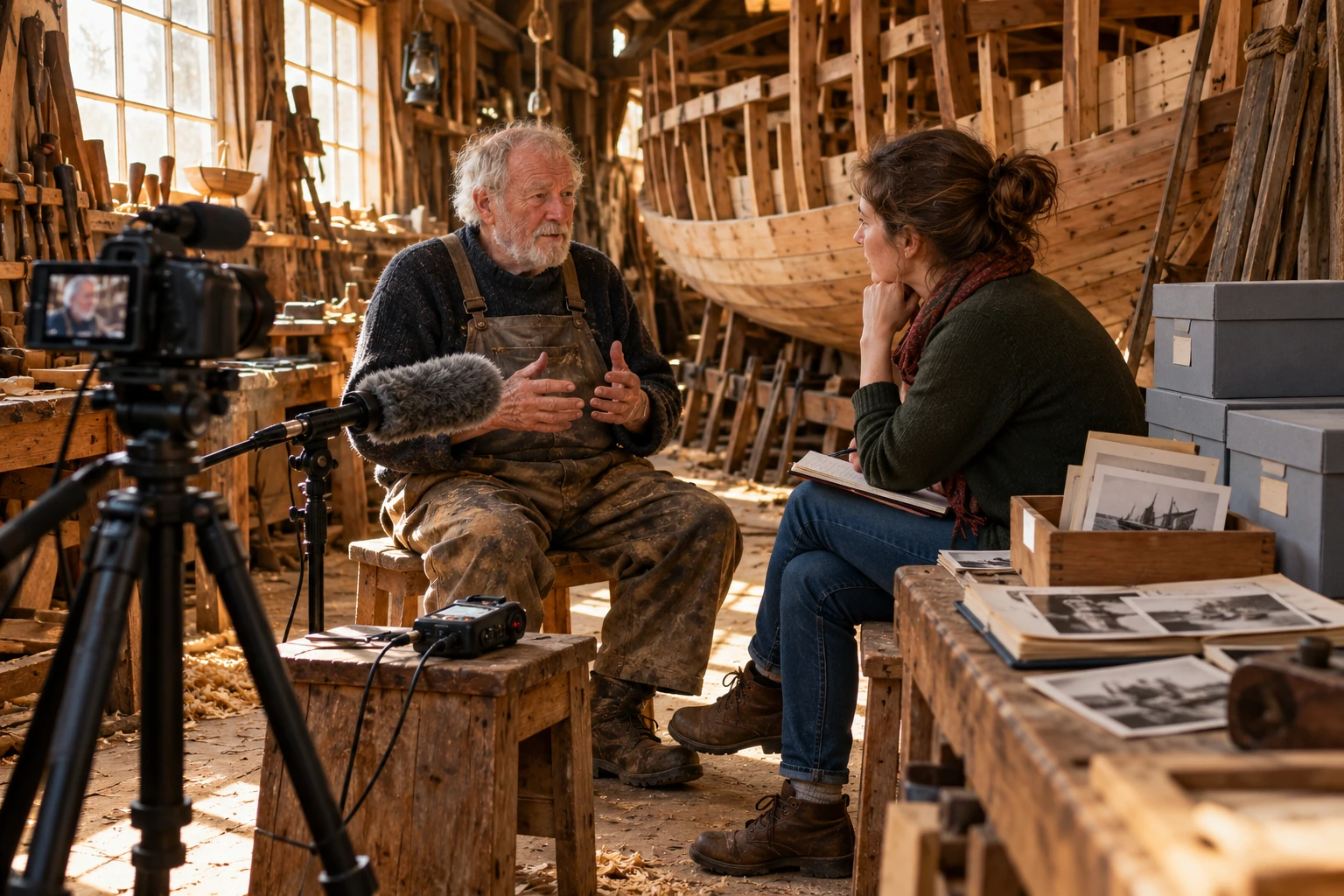
Documentation is not what happens after the work; done properly, it is part of the work. This division coordinates documentary film, photography, interviews, oral histories, writing, archives, websites, publications, social media, educational media, source control, rights, permissions and long-term institutional memory.
The division establishes what should be captured, why, for whom, in what medium, under what permissions, and at what milestone. Photography, documentary film, interviews, oral histories, writing, archives, websites, social media, publications, training materials, and public-history products are coordinated through the Media Matrix rather than produced as disconnected publicity.
The preferred model is capture once, adapt responsibly. A documented restoration may support an engineering record, grant report, training module, website story, oral-history archive, exhibit, documentary sequence, or future institutional history — provided each use is authorized and the evidence remains accurate in context.
Division 6 observes ownership, copyright, releases, privacy, confidentiality, security, procurement sensitivity, agency communications rules, site access, archival standards, and partner approval requirements.
AWWHIF does not imply endorsement or authorization through media. Public claims are labeled according to verified status, and controlled information is released only through appropriate channels.
Documentary, public-history, education, archives, communications, and knowledge-access work may be supported by grants, contributions, underwriting, sponsorship, licensing, permissible program fees, project documentation budgets, or authorized service contracts. Funding must preserve editorial and evidentiary integrity. Media activity is not used to convert unverified proposals into apparent commitments.
Division 6 supports both media skills and waterfront knowledge transfer. It can create training videos, photograph procedures, record retiring workers, document restoration techniques, capture oral histories, and produce educational materials for students, workers, visitors, decision-makers, and the public. It also creates opportunities in documentary production, photography, writing, archives, digital communications, and public history where those activities fit the program.
Documents Division 1 operations.
Explore ↗Documents Division 2 infrastructure and environmental change.
Explore ↗Documents Division 3 heritage.
Explore ↗Documents Division 4 training and skills.
Explore ↗Documents Division 5 funding and implementation milestones — and gives every division evidence they can reuse for education, applications, reporting, public explanation, recruitment, accountability, and institutional memory.
Explore ↗Documentary projects, photography, books, archives, oral histories, research, exhibitions, journalism, digital resources, maritime publications and communications.
Explore ↗Screenings, exhibitions, archival releases, publication dates, calls for papers, festivals, interviews and media milestones.
Explore ↗Video, photography, writing, editing, archives, communications, social media, research, public history and digital content.
Explore ↗Long-form documentary, Shorts and Reels, podcasts, interviews, photo essays, oral histories, historical media and educational explainers.
Explore ↗Books and media, creator tools, production resources, software, training, archives and publications.
Explore ↗